

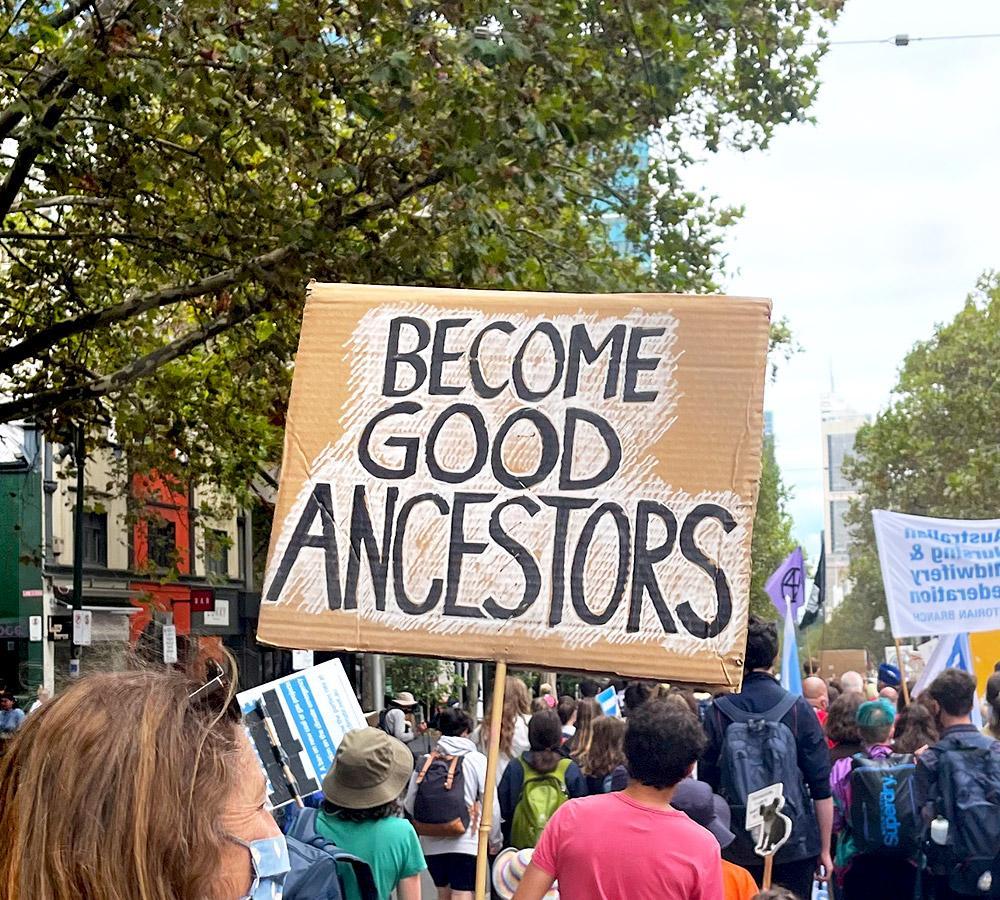
KeepCup is a B Corporation. Among the obligations B Corp certification places on us is a commitment to consider the long-term impact of our decisions on workers, community, environment and customers, not just shareholders.
That obligation includes the political environment we operate in. Environmental policy, labour policy, manufacturing policy, all decided by elected governments. So when a UK general election rolls around, we don't pretend it doesn't matter to us. It does. And we're going to say so.
This isn't a partisan post. KeepCup doesn't endorse parties or candidates. But we'll be clear about what we think the next UK government, of whatever political colour, should prioritise if the country is serious about the next ten years.
Why a Business Engages With Politics
There's a fair question about whether a coffee cup manufacturer should be commenting on national policy at all. Our answer is that we're not just a coffee cup manufacturer, we're a business operating within a regulatory environment we have a stake in.
The decisions that affect manufacturing costs, supply chains, customers' purchasing power and environmental footprint are made by elected governments. Choosing not to engage isn't neutral, it's a default position that benefits incumbents. So we engage.
What We Think the Next Government Should Prioritise
1. Real Climate Action, Not Targets Without Levers
The UK is legally committed to net-zero by 2050 under the Climate Change Act. That commitment is meaningful only with policy levers: an effective carbon price, a clear end to new oil and gas licensing, accelerated renewable infrastructure and grid investment, public transport investment outside London, and a fair transition framework for affected workers.
The next government needs to move from declarative climate policy to operational climate policy. The target without levers is the most expensive form of inaction, it locks in delay while sounding committed.
2. Coordinated Single-Use Plastic Framework Across the Four Nations
The UK currently has overlapping but inconsistent rules across England, Scotland, Wales and Northern Ireland for single-use plastics. Different products restricted, different timelines, different definitions. The fragmentation makes compliance expensive for businesses and reduces effectiveness for the environment.
A coordinated framework, harmonising single-use plastic restrictions across the four nations, would simplify compliance for manufacturers and accelerate the transition to reusables. It's the kind of regulatory reform that costs little and delivers measurable environmental gain.
3. Deposit Return Scheme Rollout and Expansion
The UK's Deposit Return Scheme for drinks containers has been promised for years and repeatedly delayed. Getting it operational, and harmonised across the four nations, would lift recycling rates and create a clear price signal. Considering disposable coffee cups for inclusion would extend that price signal to the single-use category that disposables have historically avoided.
The deposit creates the economic case the disposable industry has historically resisted.
4. Investment in UK Manufacturing
KeepCup is expanding manufacturing capability in more regions over time. Wherever production happens, policy support helps: industrial electricity prices that reflect cheap renewable supply rather than gas peaking, skilled training that supports manufacturing capacity, and procurement preferences that favour local production where quality and price are competitive.
UK manufacturing has shrunk for decades. It doesn't have to keep shrinking. The policy choices that would reverse that decline are knowable; they require political commitment.
5. Honest Discussion of Consumption
UK per-capita consumption and waste generation sit at the higher end of the OECD range. Climate policy that ignores consumption patterns is incomplete.
The political class on all sides has been reluctant to address this honestly because reduced consumption sounds like reduced quality of life. It doesn't have to be. Reuse, repair, sharing, modular product design, these are quality-of-life improvements, not sacrifices. The political conversation hasn't caught up to the lived reality.
What We're Not Asking For
We're not asking for KeepCup-specific subsidies, regulatory carve-outs, or competitive advantage. We're not asking for our market to be protected from competition. We're not asking for any policy that exists specifically to benefit our business.
The five priorities above would benefit thousands of UK businesses, many UK workers, and the broader environment we all share. Many of those businesses compete with us. We'd be fine with that.
How to Vote With Long-Term Impact in Mind
Five questions worth asking of any candidate seeking your vote:
- What specific climate policy levers will you implement, with what timelines?
- What is your position on a coordinated UK single-use plastic and reuse framework?
- What is your position on UK manufacturing capacity?
- What is your position on extended producer responsibility, the principle that manufacturers bear cost for end-of-life of their products?
- What is your position on biodiversity protection and the UK's nature recovery commitments?
The answers, if specific rather than aspirational, tell you most of what you need to know about whether the candidate's stated values are matched by policy commitments.
The Bigger Frame
Voting is one act among many. Between elections, the businesses, organisations and individuals who pressure elected representatives have more daily influence than the voters who put them there. But the voting moment is the highest-leverage individual political act available to most people in the UK.
If you care about reuse, climate, manufacturing, biodiversity or any of the issues KeepCup cares about, the most important thing you do at each election is the ballot. We won't tell you which way to mark it. We'll just remind you that the marks add up.
FAQs
Does KeepCup endorse political parties?
No. KeepCup advocates for specific policies, climate action, reuse frameworks, manufacturing support, biodiversity protection, but does not endorse political parties or individual candidates.
Why does KeepCup engage in political advocacy?
As a B Corporation, KeepCup is committed to considering the long-term impact of our decisions on stakeholders including the environment and community. National policy directly affects our manufacturing, supply chains and customers, and we engage accordingly.
What environmental policies does KeepCup advocate for?
Coordinated UK single-use plastic rules across the four nations, full Deposit Return Scheme rollout including consideration of disposable cups, real (not aspirational) climate policy with operational levers, and extended producer responsibility frameworks.
What can I do to support environmental policy in the UK?
Vote informed by candidates' actual policy positions, contact your MP on specific issues, support advocacy organisations, and choose products from companies that are accountable for their environmental impact (B Corp certified).
Takeback - Encouraging reuse or providing an excuse?
If you stand for nothing, B Corp, what'll you fall for?